The publication of ISO 14001:2026 marks the most significant update to environmental management requirements in over a decade. Whilst the changes are not considered a complete overhaul of the standard, organisations operating within the defence, aerospace, cyber security and government supply chain sectors should not underestimate the importance of the revision.
For defence contractors, environmental management is no longer simply about waste disposal, energy usage and compliance obligations. Increasingly, environmental performance forms part of supplier due diligence, contract award criteria, ESG expectations and long-term business resilience.
The organisations that start preparing now will be in a far stronger position when certification bodies begin auditing against the new requirements.
What Is Changing in ISO 14001:2026?
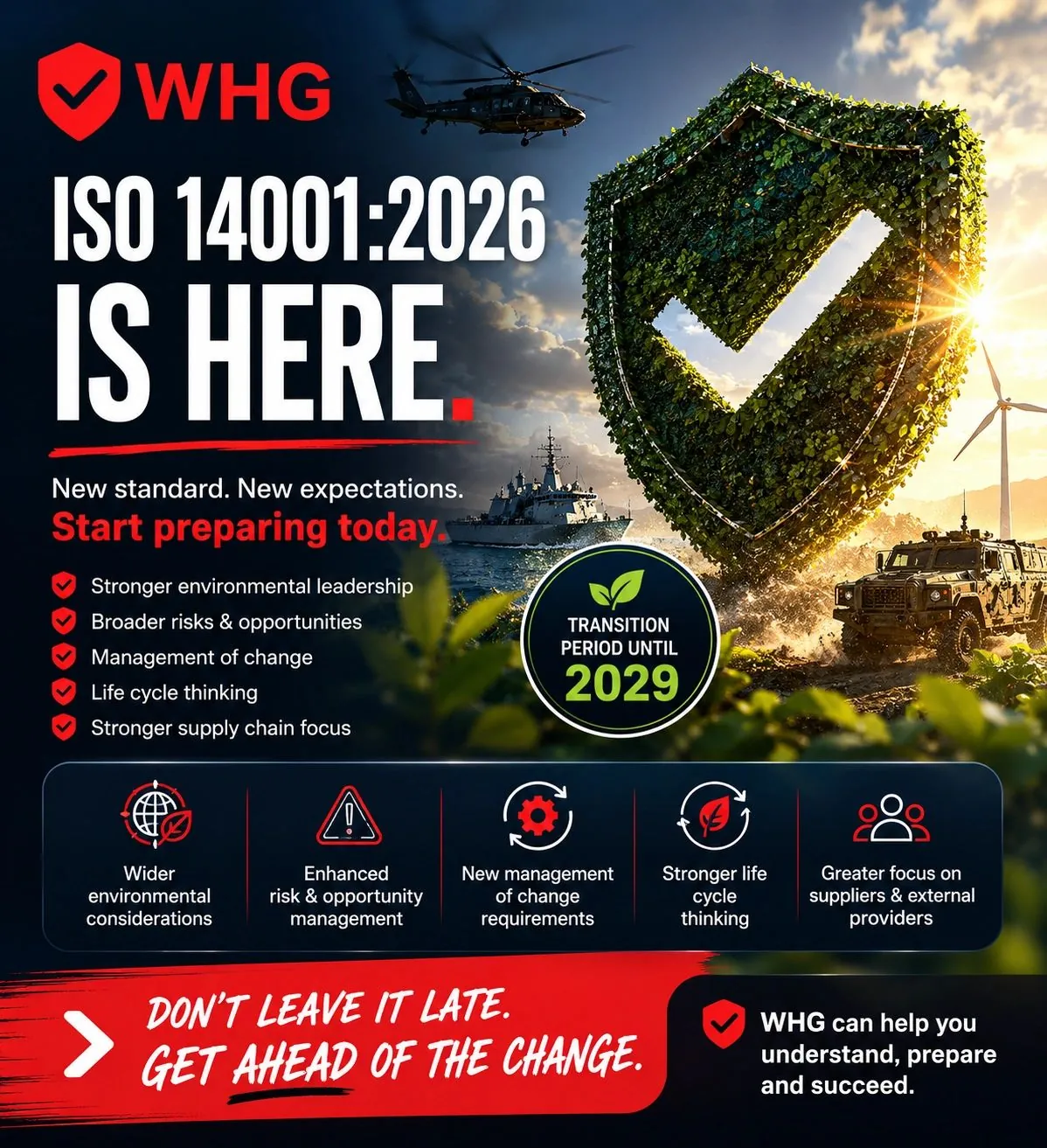
The revised standard introduces several important clarifications and enhancements designed to align environmental management with modern sustainability challenges and business risks. The overall structure remains familiar, making transition easier for organisations already certified to ISO 14001:2015.
Some of the key changes include:
Broader Environmental Considerations
Organisations will now be expected to consider a wider range of environmental conditions when analysing their organisational context.
This extends beyond climate change and includes factors such as:
- Biodiversity
- Pollution levels
- Natural resource availability
- Environmental resilience
- Sustainability impacts across the organisation's activities
This represents a shift from a purely compliance-focused approach towards a more strategic environmental perspective.
Stronger Focus on Risk and Opportunity Management
The revised standard provides greater clarity around environmental risks and opportunities, helping organisations better understand how environmental issues could impact business continuity, operational performance and stakeholder expectations.
For defence suppliers, this is particularly relevant where contracts increasingly require evidence of resilience, sustainability and responsible business practices.
New Requirements for Managing Change
One of the most notable additions is the introduction of a formal management of change requirement.
Organisations will need to demonstrate how environmental considerations are assessed and controlled when changes occur, including:
- New projects
- Facility changes
- Process modifications
- Technology implementation
- Supply chain changes
Many organisations already perform elements of this activity, but the new standard will require a more structured and demonstrable approach.
Enhanced Life Cycle Thinking
Life cycle considerations have been strengthened, requiring organisations to look more closely at environmental impacts throughout the entire lifecycle of products and services.
For defence manufacturers and technology providers, this may include:
- Raw material sourcing
- Manufacturing processes
- Transportation
- Product use
- End-of-life disposal
This is particularly relevant as government departments continue to increase sustainability expectations throughout the procurement process.
Increased Focus on Suppliers and External Providers
The standard now places greater emphasis on controlling externally provided products, services and processes rather than simply outsourced activities.
This aligns closely with trends already being seen across MOD and wider government supply chains where organisations are expected to understand and manage environmental risks beyond their own immediate operations.
Why Defence Companies Should Act Now
Although a transition period is expected to run until 2029, organisations that delay preparation may find themselves under unnecessary pressure during surveillance and recertification audits.
Defence organisations face additional challenges because environmental performance increasingly influences:
- Supplier approval processes
- Framework agreements
- Government procurement opportunities
- ESG reporting requirements
- Corporate governance expectations
- Customer confidence
Many organisations are already focused on Cyber Essentials, ISO 27001, ISO 42001, NIST, CMMC and other compliance requirements. Environmental management should not become an afterthought.
The most effective approach is to begin assessing gaps now, allowing improvements to be implemented gradually and strategically rather than through a rushed transition programme.
How WHG Can Help
At WHG, we understand the unique challenges faced by defence, aerospace, technology and government suppliers.
Our team supports organisations through:
ISO 14001:2026 Gap Analysis
We assess your existing Environmental Management System against the new requirements and identify areas requiring improvement before transition audits begin.
Integrated Management System Development
For organisations already operating ISO 9001, ISO 27001, ISO 45001 or ISO 42001 systems, we help integrate environmental requirements efficiently to reduce duplication and administrative burden.
Internal Audits and Readiness Reviews
Our experienced auditors provide independent assessments to ensure your EMS is ready for transition and certification.
Environmental Risk and Supply Chain Assessments
We help organisations understand environmental risks across operations, projects and supplier networks, ensuring compliance with both ISO requirements and customer expectations.
Training and Awareness Sessions
We deliver practical training for leadership teams, environmental managers and operational staff to ensure the organisation fully understands the changes introduced within ISO 14001:2026.
The Bottom Line
ISO 14001:2026 is not a revolution, but it is an important evolution.
The organisations that treat environmental management as a strategic business issue rather than a compliance exercise will gain the greatest benefit. For defence suppliers in particular, demonstrating strong environmental governance is becoming increasingly important for winning and retaining business.
The transition window may seem lengthy, but preparation should begin now.
WHG is already supporting organisations in understanding the new requirements, identifying gaps and developing practical transition plans.
If your organisation wants to understand how ISO 14001:2026 will impact your business, contact WHG today and start preparing before the market catches up.
Talk to WHG
Practical, defence-aware support across ISO, Def Stan and cyber compliance.